
Visit from female students of Fujairah Islamic Scientific Academy
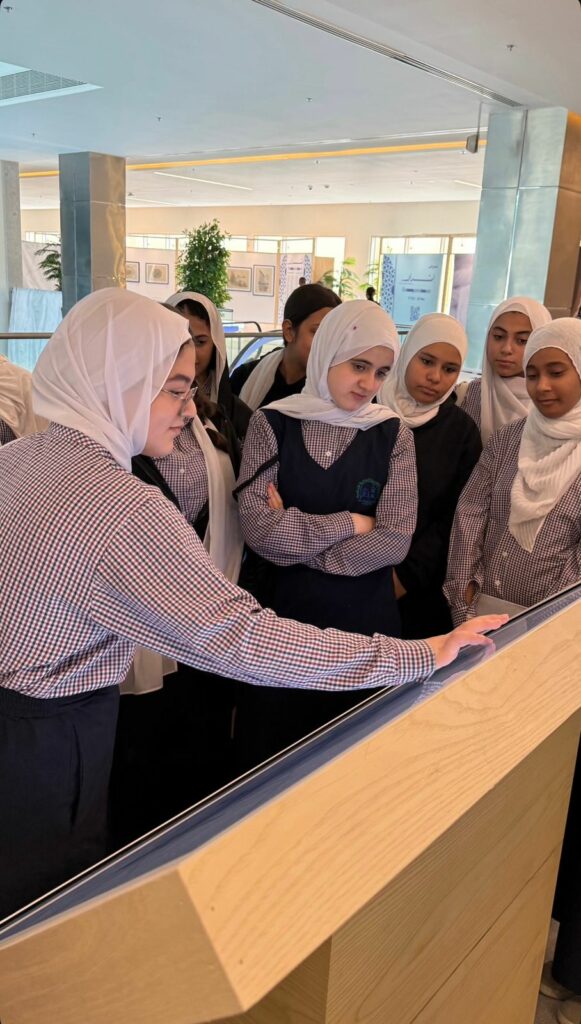
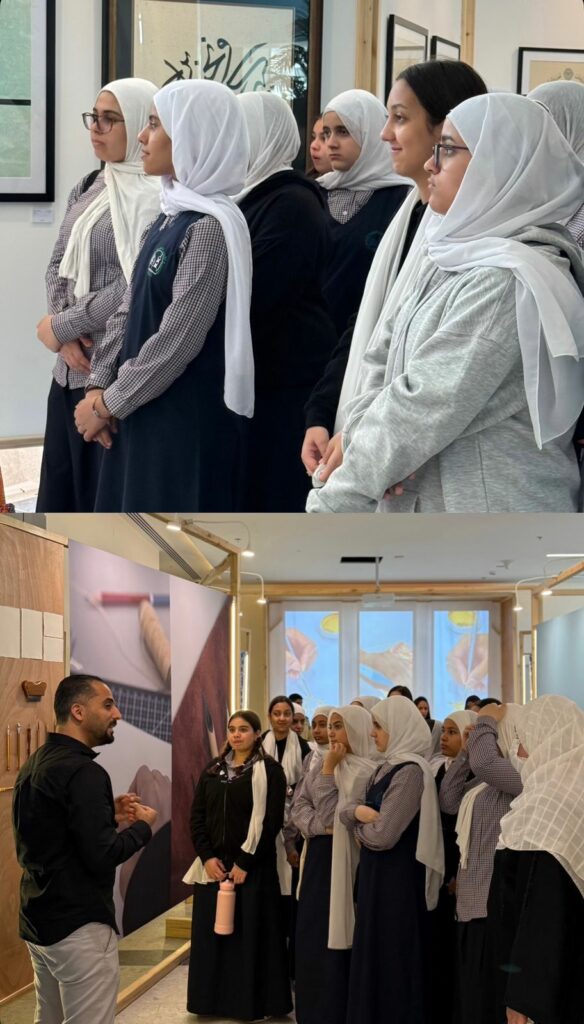
On the fifth of November, the Suko School of Calligraphy and Ornamentation welcomed female students from the Fujairah Islamic Scientific Academy as part of the centre's educational visit series. The visits aim to introduce students to Islamic arts and provide practical experience rooted in artistic heritage. Twenty-eight students arrived mid-morning and were divided into small groups before a guided tour of the 'Imtidad' exhibition, which showcases a variety of works based on calligraphy, ornamentation, and traditional drawing. The students stood before the artworks, contemplating their intricate details. Some exchanged observations about colours and execution techniques, while others focused on understanding the nature of the calligraphy and recurring decorative patterns.
After the tour, the students headed to the practical workshops prepared by the teaching team at Soko. The first workshop began with botanical drawing with instructor Shaifun, who explained to them how to shape forms with watercolours by grading between light and shade. The students were asked to draw a small apple, and although the task seemed simple at first, the experience revealed to them the importance of concentration and attention to subtle details. As time went on, the movement became smoother, and the features began to appear on paper in a satisfying way.
The students then moved on to the Arabic calligraphy workshop with instructor Mohsen. The workshop focused on the basics of holding the pen, writing angle, and the balance between thick and thin lines. The experience was new and strange for some, but it soon turned into a pleasant challenge. The students wrote their names for the first time in Naskh script, and the reactions varied from bewildered laughter at the first attempt to joy when the word appeared coherent for the first time.
The adornment workshop led by trainer Numark had a calm atmosphere, allowing the students to focus. They received papers containing decorative units ready for colouring, and then began choosing suitable colours for each part. The colouring process was an opportunity to experiment with harmony between shades and learn the principle of visual consistency, and the workshop outputs showed a beautiful variation between the students' styles, despite them using the same model.
As the day drew to a close, the students gathered their work, and a natural conversation ensued between them and the Soko team about the experience and what they had learned. The students were grateful for the opportunity, and some mentioned their desire to return to participate in longer workshops. The group left, carrying with them a mix of new knowledge and pleasant impressions, reflecting the value of these visits in broadening the students' horizons and connecting them with the aesthetics of Islamic art in a practical and calm manner.