
Indian School Visit
On 29 January, the School of Calligraphy and Ornamentation welcomed a group of students from the Indian School – Fujairah branch, as part of its educational visits programme organised throughout the academic year. This initiative reflects the School’s ongoing commitment to raising awareness of Islamic arts and providing learning opportunities that combine theoretical knowledge with direct practical experience.
The visiting group consisted of 20 male and female students from the Indian community. The visit began with an introductory tour of the exhibition featuring the winning works of the Fujairah International Competition for Calligraphy and Ornamentation. The exhibition presents distinguished examples that highlight the diversity of Arabic calligraphy schools and the richness of Islamic ornamentation. During the tour, students learned about the differences between various calligraphic styles and compositional approaches. They carefully observed the intricate details of decorative elements and colour harmony, and listened to explanations about the stages of producing an artwork, from initial concept and planning to final execution. Their thoughtful questions reflected curiosity and a genuine interest in understanding the artistic techniques and historical contexts behind each piece.
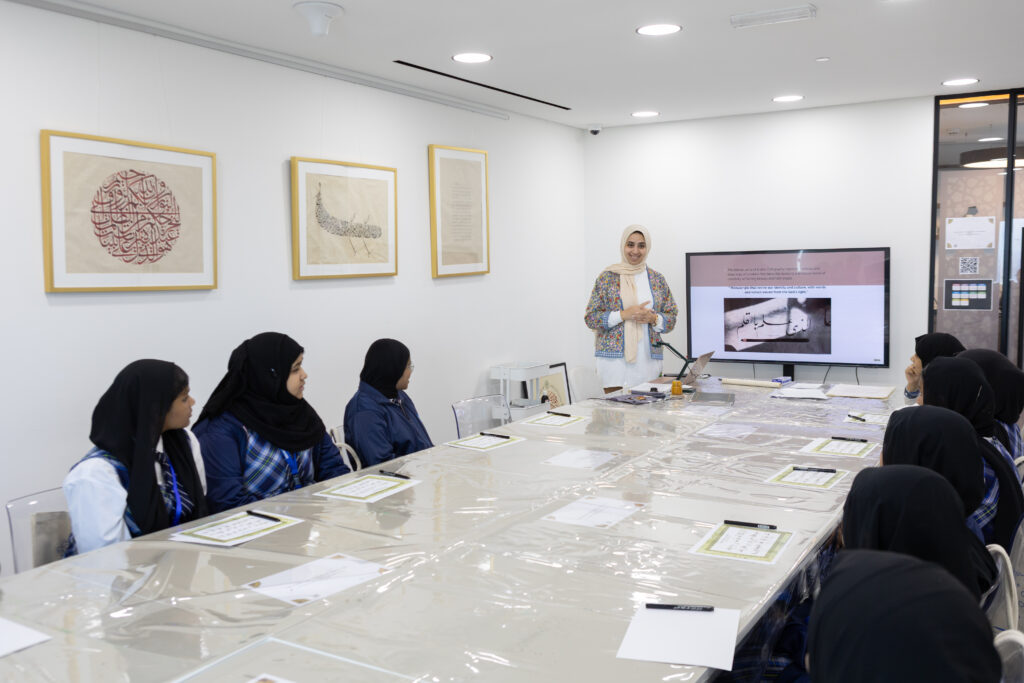
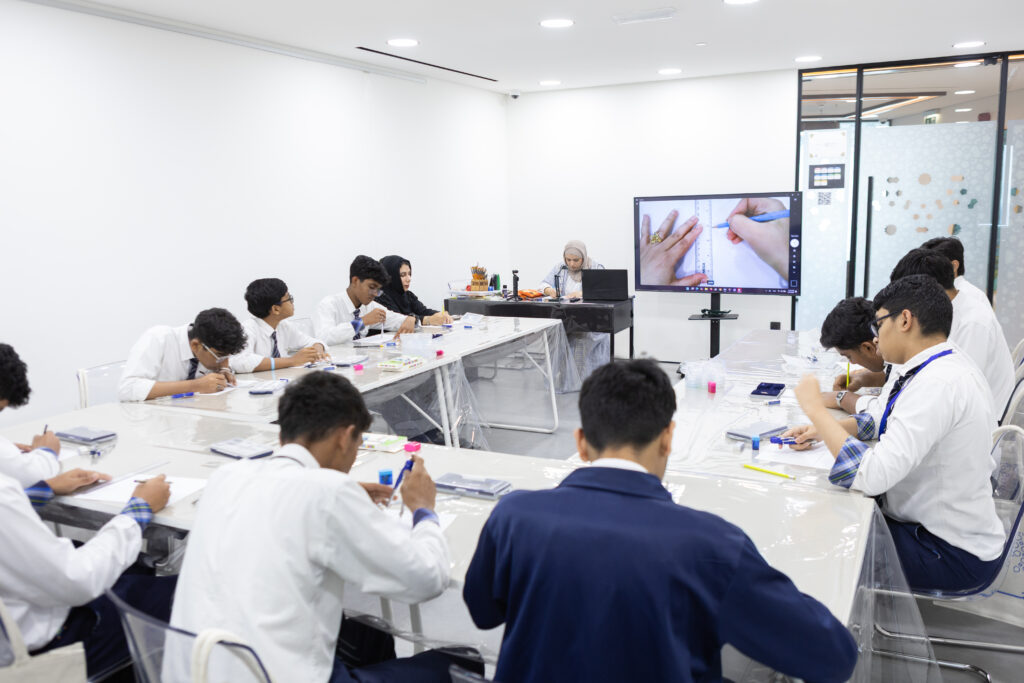
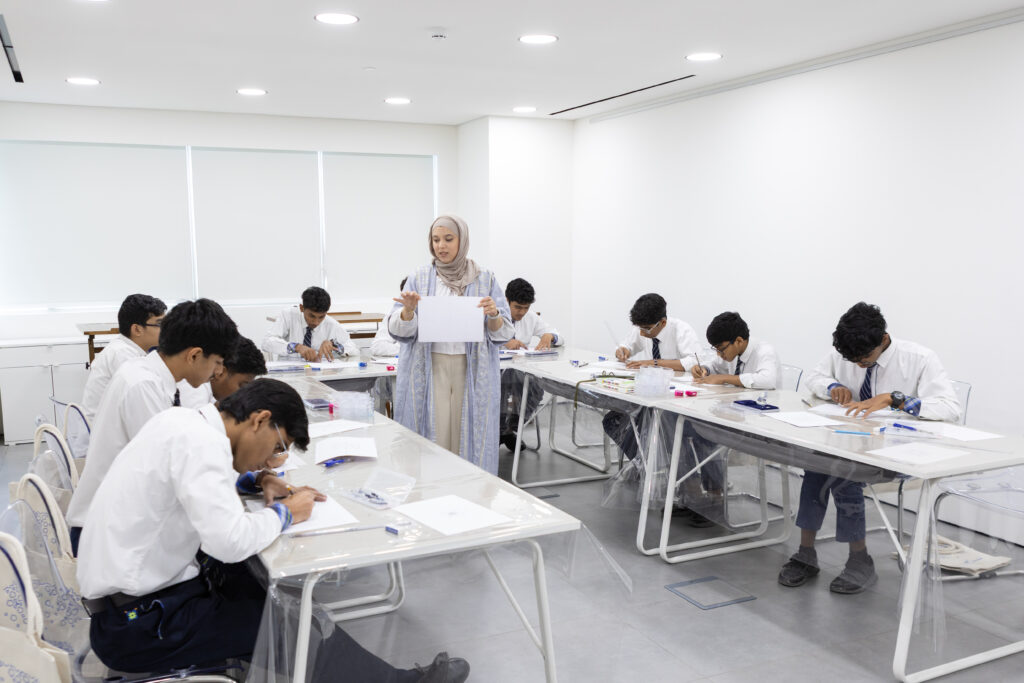
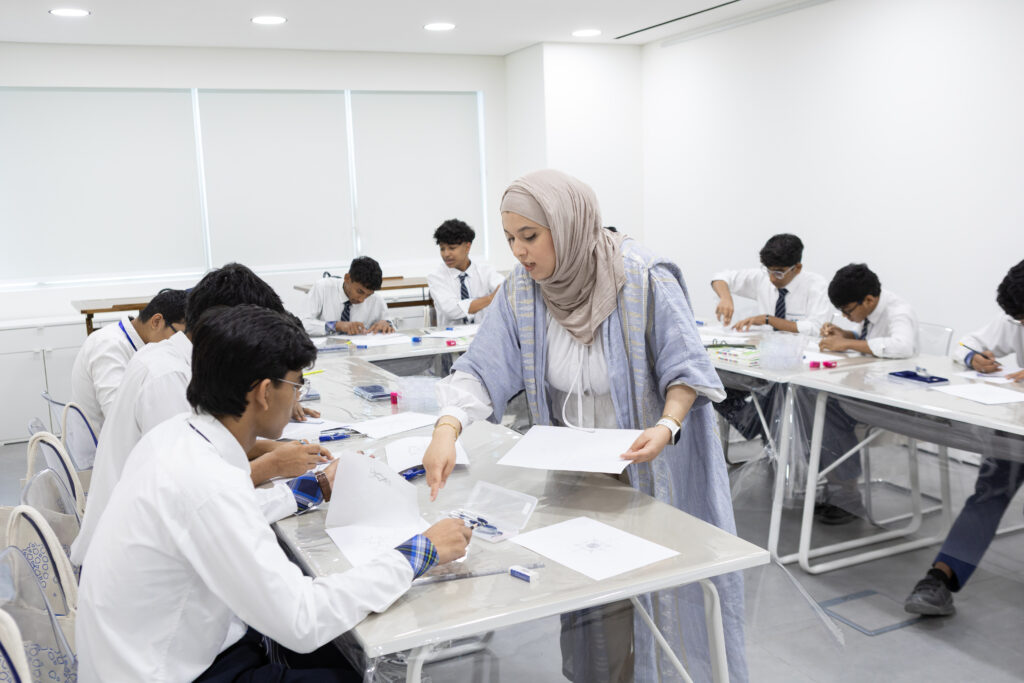
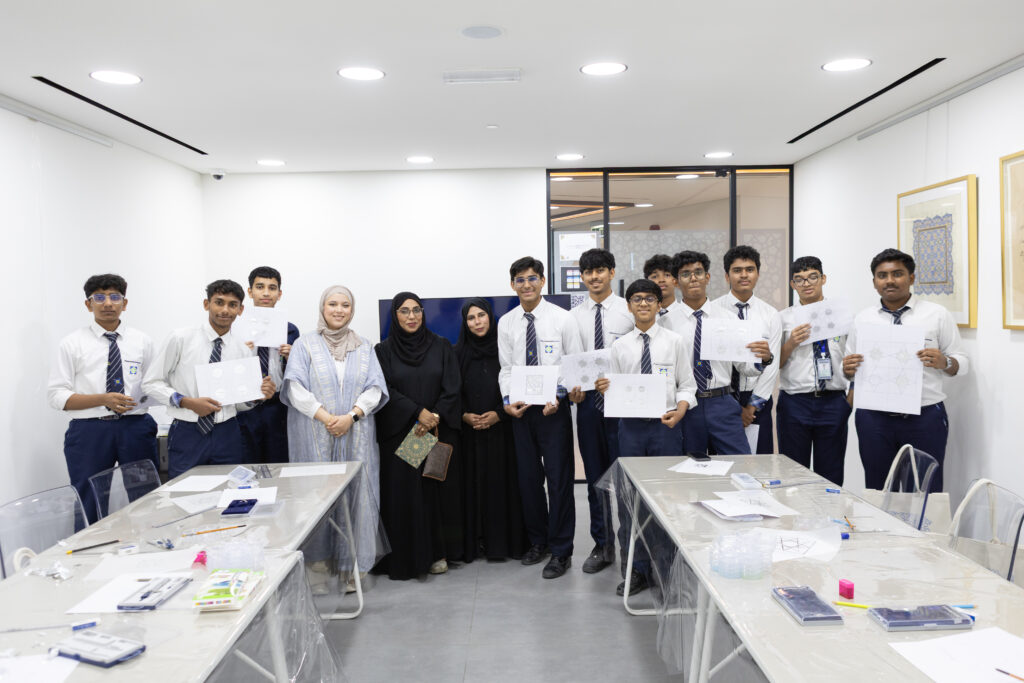
Following the tour, the students moved on to specialised workshops designed according to their age group and interests. They were divided into two groups to ensure focused engagement. The male students attended a workshop on Islamic geometry led by instructor Asayel, where they explored the foundational principles of geometric pattern construction, including repetition, symmetry, and mathematical precision. Through practical exercises, they gained a clearer understanding of the relationship between lines and angles in creating balanced and harmonious designs.
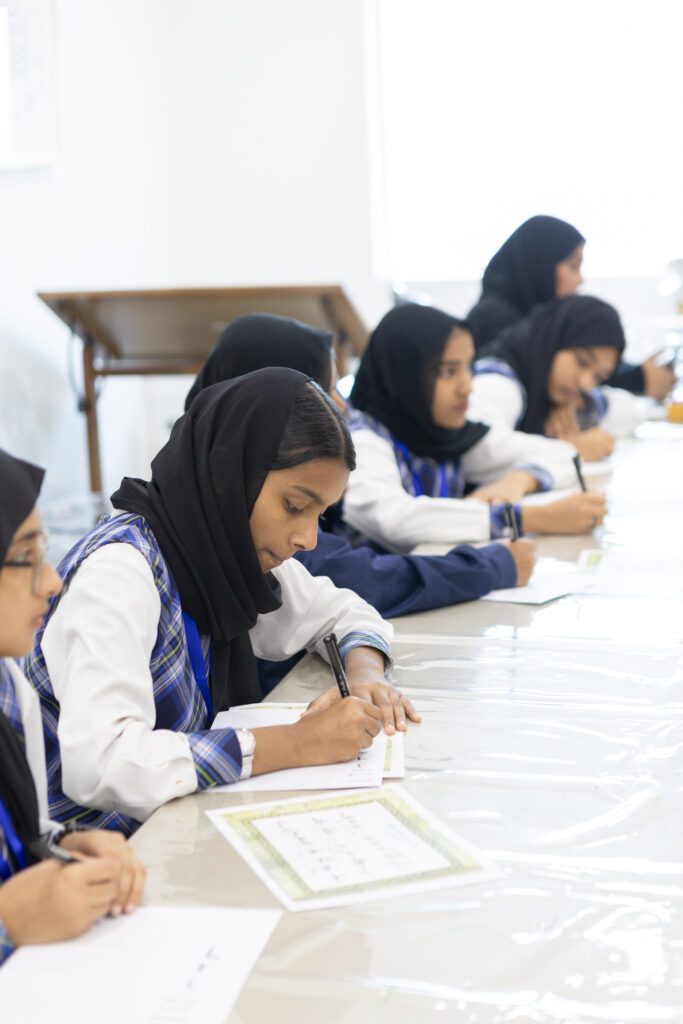
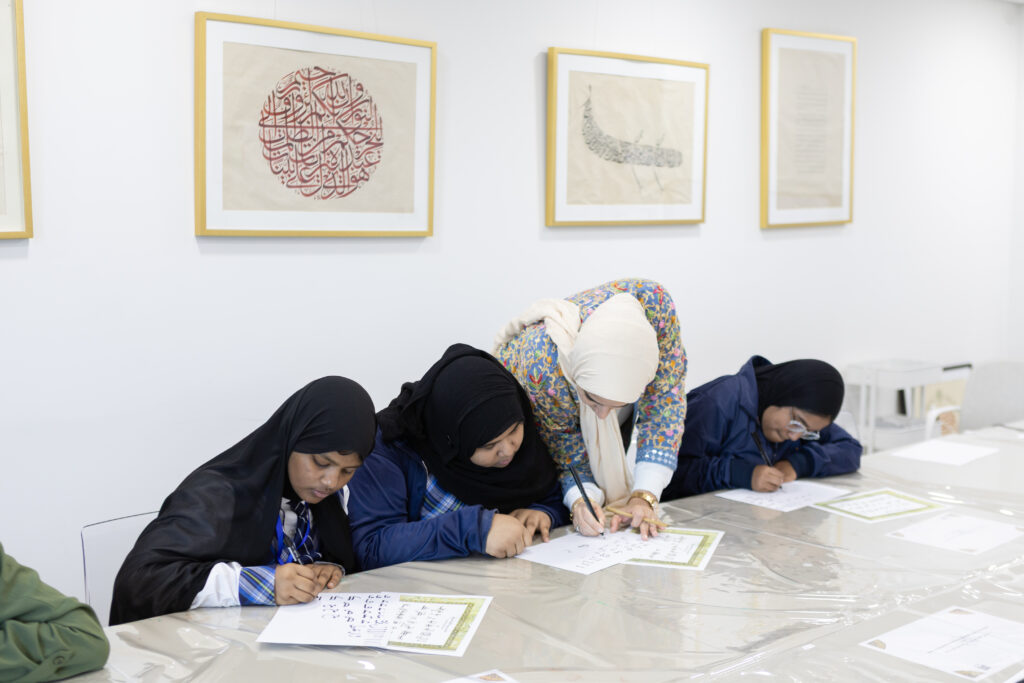
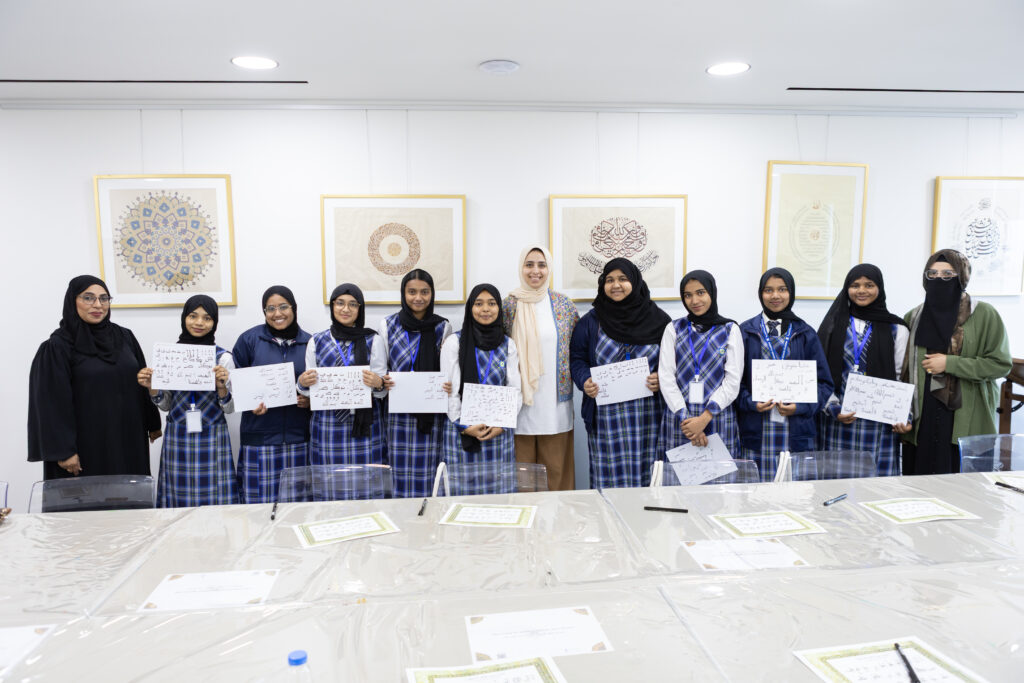
Meanwhile, the female students participated in a workshop on Maghrebi script under the supervision of instructor Tasneem. The session introduced them to the distinctive characteristics, historical background, and aesthetic principles of the script. A practical component allowed them to experiment with writing the letters themselves, with emphasis on proportion control, pen angle, and the fluid movement of strokes.
The visit concluded in a positive and enthusiastic atmosphere, with students expressing their appreciation for the experience and the knowledge they gained. They emphasised the value of such initiatives in deepening their understanding of Islamic arts and strengthening their connection to artistic and cultural heritage. This visit forms part of the School’s broader efforts to open its doors to educational institutions and foster an environment that nurtures aesthetic awareness and appreciation of traditional arts among younger generations.