
Al Wasl University Visit
On 28 January, the School of Calligraphy and Ornamentation welcomed a group of students from Al Wasl University – Fujairah, as part of its educational visits programme carried out throughout the academic year. The initiative aims to promote awareness of Islamic arts and provide practical experiences that connect academic study with direct artistic practice.
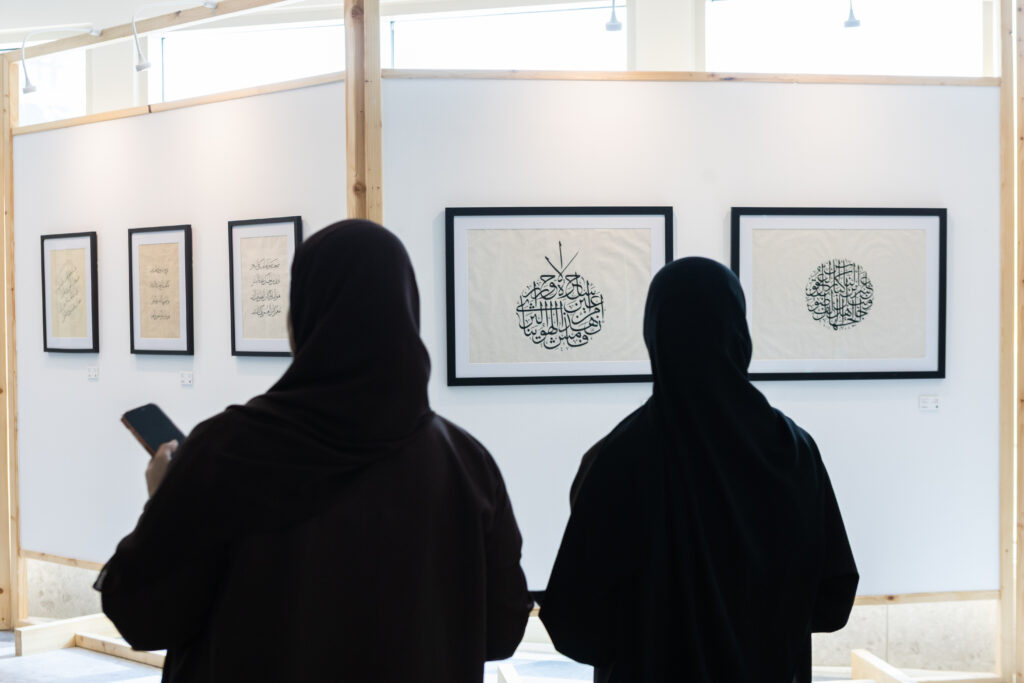
A total of 35 students participated in the visit, which began with an introductory tour of the exhibition featuring the winning works of the Fujairah International Competition for Calligraphy and Ornamentation. The exhibition showcases diverse examples of Arabic calligraphy and Islamic ornamentation. During the tour, the students examined the artistic compositions in detail, learned about the differences between various calligraphic schools and gilding techniques, and listened to explanations about the stages of producing an artwork, from initial concept to final presentation. They showed clear interest in the displayed works and asked thoughtful questions reflecting a genuine desire to understand the artistic and historical dimensions behind each piece.
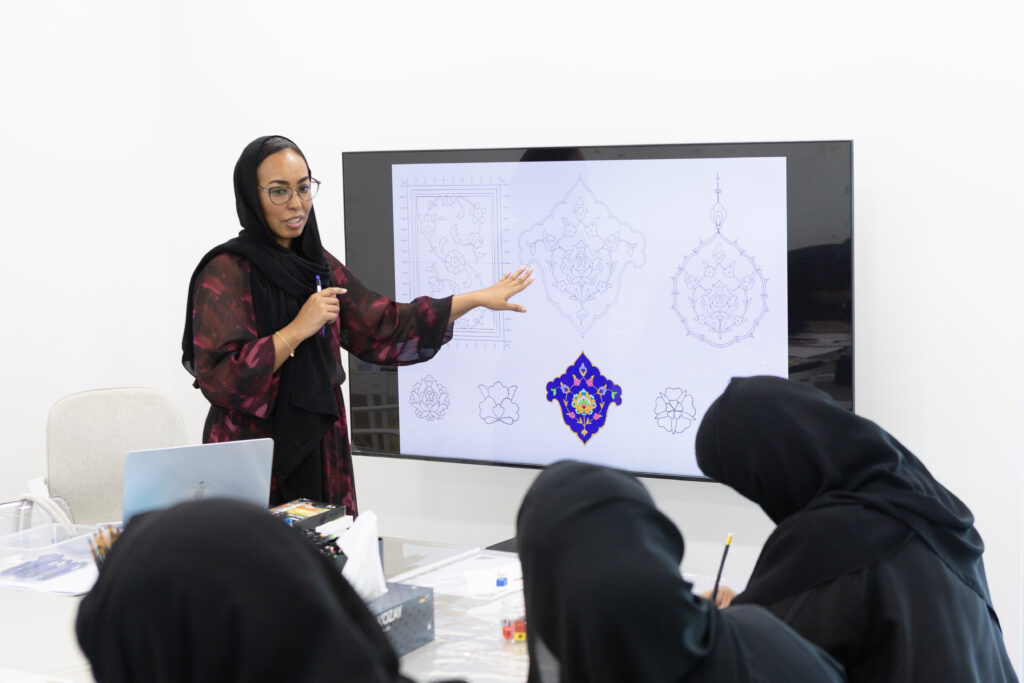
Following the tour, the students took part in a series of specialised workshops designed in line with their academic interests. The programme opened with a workshop on Islamic geometry led by instructor Asayel, where students explored the foundations of geometric pattern construction, principles of repetition and symmetry, and the mathematical precision underlying this art form. These concepts were applied through practical exercises that strengthened their understanding of the relationship between lines, angles, and visual balance.
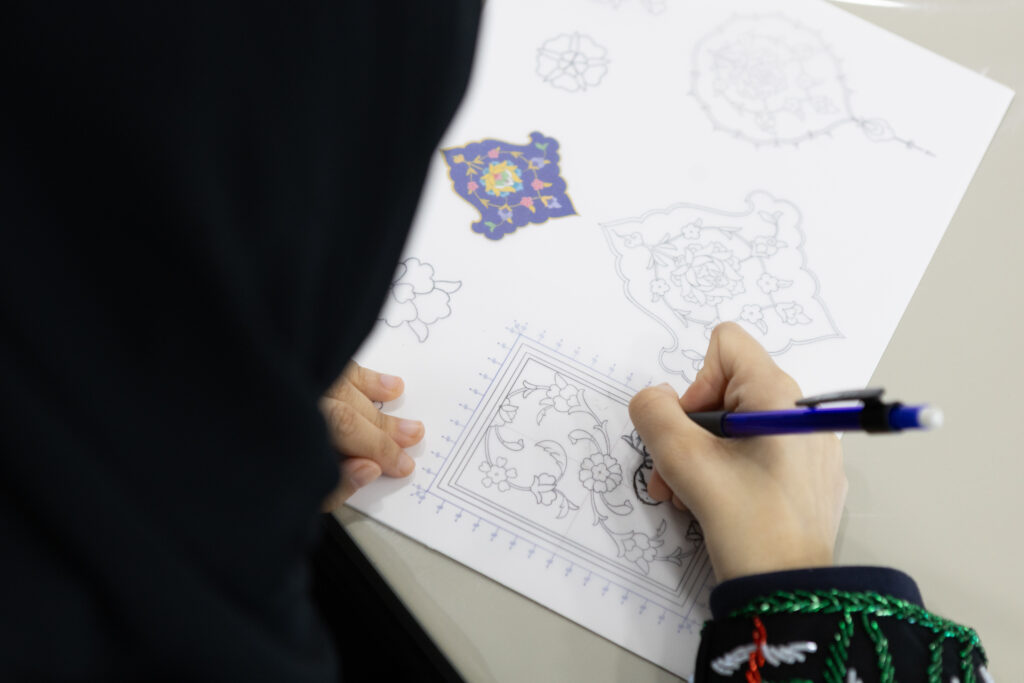
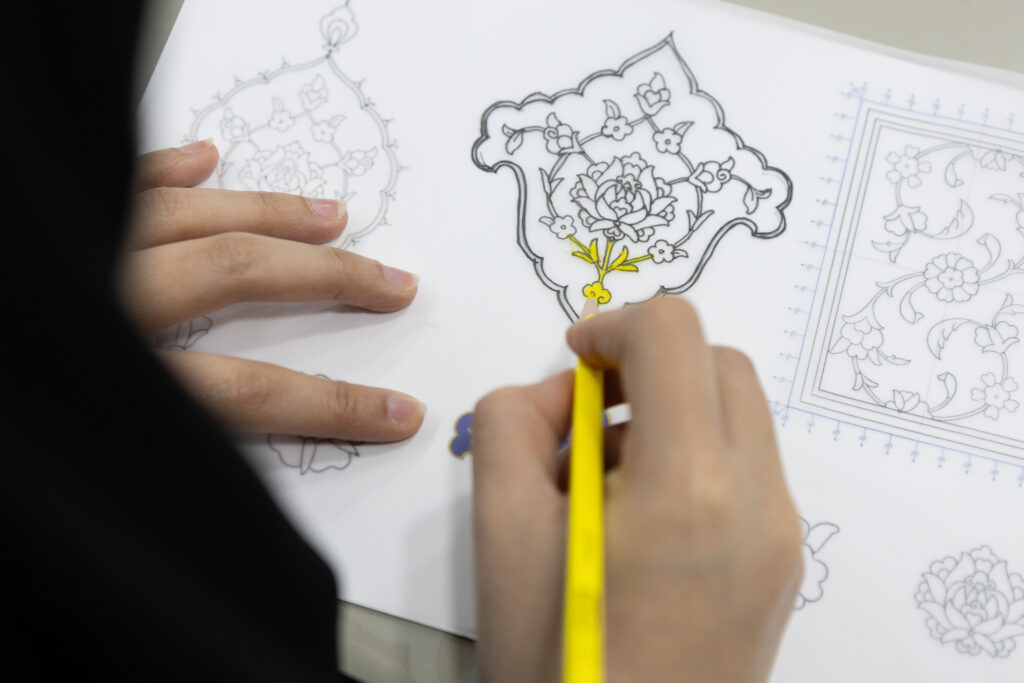
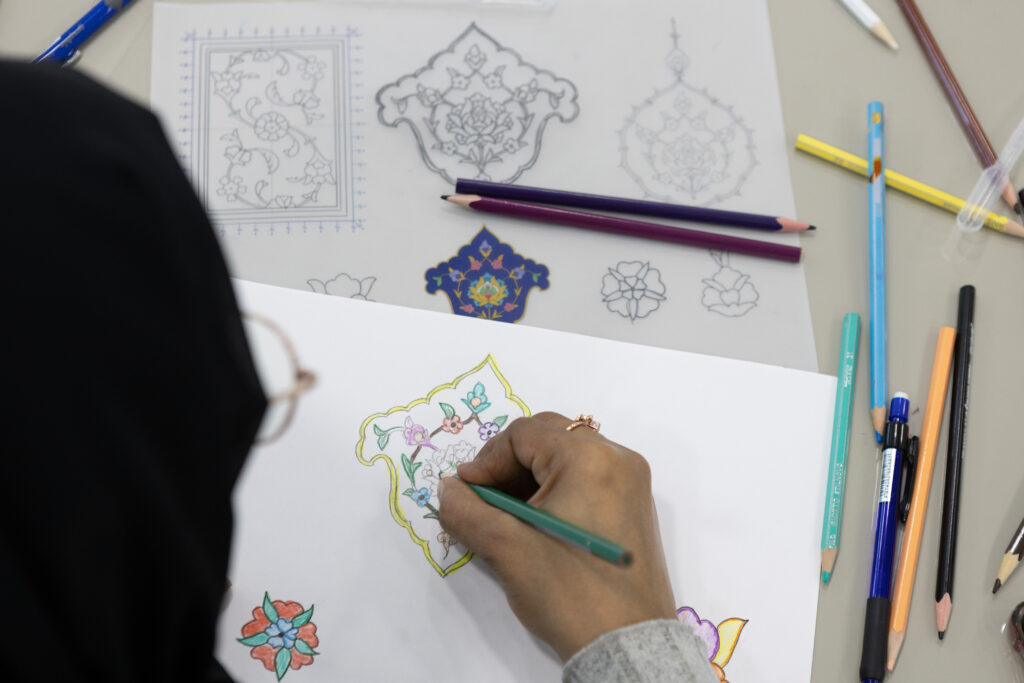
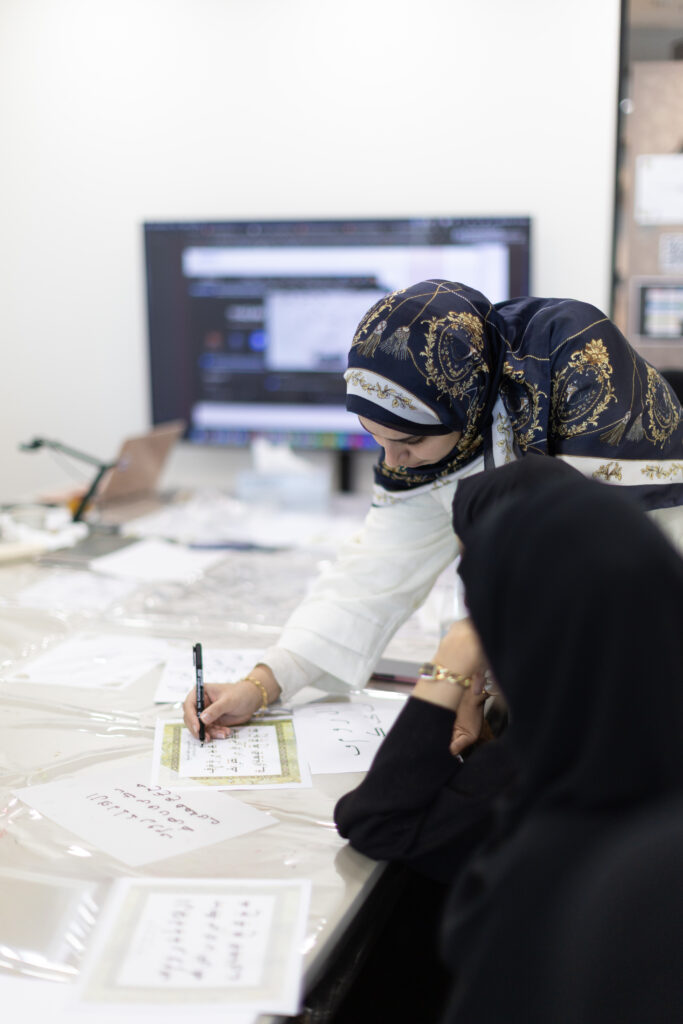
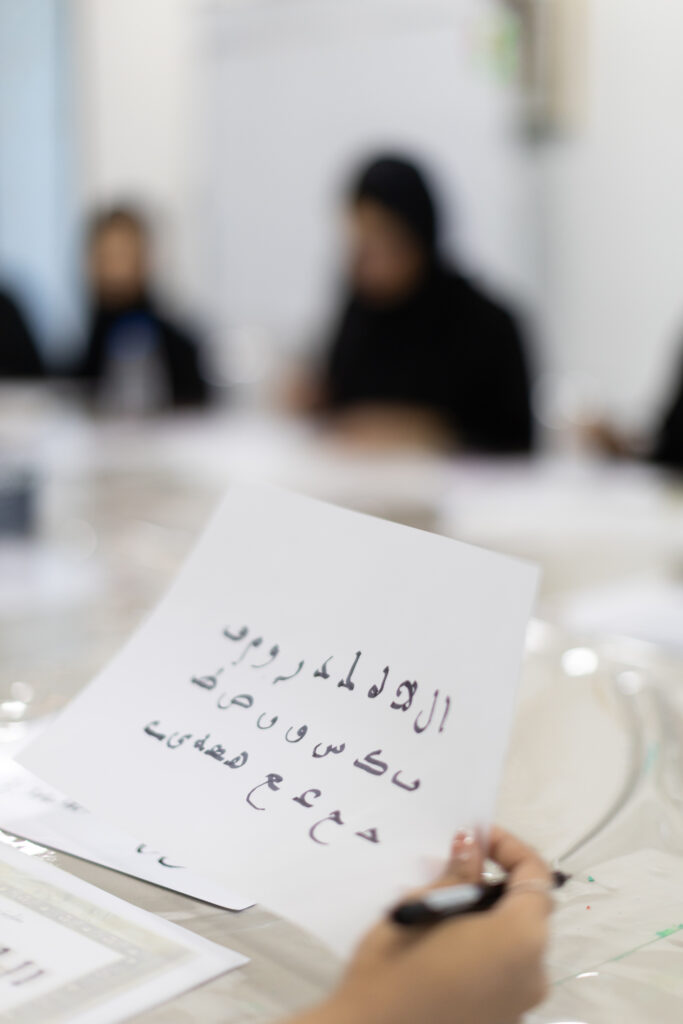
A second workshop focused on Maghrebi script under the supervision of instructor Tasneem, highlighting the distinctive characteristics and aesthetic principles of the script. Students engaged in hands-on practice, learning to draw letters while paying attention to proportion, structure, and fluidity. Meanwhile, a third group participated in a botanical ornamentation and gilding workshop led by instructor Namareq, where they explored the beauty of plant motifs and learned traditional gilding techniques with careful attention to detail.
The visit concluded in an atmosphere of enthusiasm and engagement, with students expressing their appreciation for the experience, which allowed them to explore Islamic arts firsthand within a structured educational environment. This visit forms part of the School’s ongoing efforts to strengthen collaboration with academic institutions and support programmes that nurture aesthetic awareness and deepen understanding of Islamic visual heritage among university students.